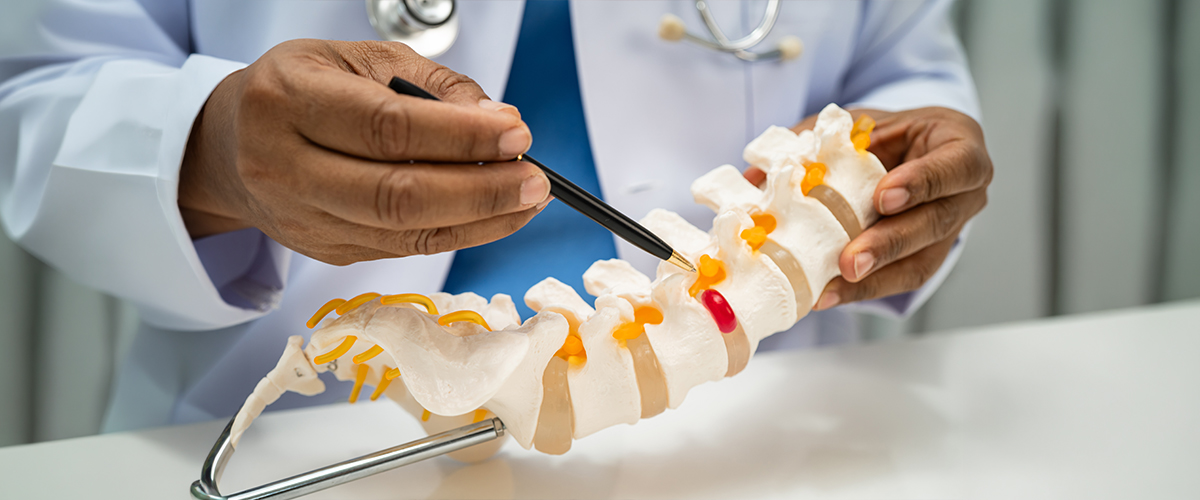
Types of Myelopathy
There are several types of myelopathy, each with its own distinct causes and
characteristics. Here are some common types of myelopathy –
-
Cervical myelopathy –
Cervical myelopathy refers to the compression or dysfunction of the spinal cord
in the neck region (cervical spine). It is often caused by conditions such as
cervical spinal stenosis (narrowing of the spinal canal), herniated discs,
degenerative disc disease, or spinal tumors in the cervical spine. Symptoms may
include neck pain, numbness or weakness in the arms and hands, coordination
difficulties, and changes in bowel or bladder function.
-
Thoracic myelopathy –
Thoracic myelopathy involves the compression or dysfunction of the spinal cord
in the middle back region (thoracic spine). It is relatively less common than
cervical or lumbar myelopathy. Thoracic myelopathy is typically caused by
conditions such as spinal cord tumors, herniated discs, spinal fractures, or
spinal infections. Symptoms may include pain in the mid-back region, numbness or
weakness in the trunk and lower extremities, difficulty with balance and
coordination, and bowel or bladder dysfunction.
-
Lumbar myelopathy –
Lumbar myelopathy refers to the compression or dysfunction of the spinal cord in
the lower back region (lumbar spine). It is less common than cervical myelopathy
but can occur due to conditions such as lumbar spinal stenosis, herniated discs,
or spinal tumors. Symptoms may include lower back pain, numbness or weakness in
the legs, difficulty with walking or balance, and bowel or bladder disturbances.
-
Compressive myelopathy –
Compressive myelopathy occurs when the spinal cord is compressed by a physical
obstruction, such as a herniated disc, bone spur, or tumor. The compression
leads to impaired function and can cause various neurological symptoms depending
on the location and severity of the compression.
-
Vascular myelopathy –
Vascular myelopathy refers to spinal cord dysfunction caused by compromised
blood flow to the spinal cord. Conditions such as spinal cord infarction
(stroke), arteriovenous malformations, or spinal cord ischemia can lead to
vascular myelopathy. Symptoms may include sudden onset of severe back pain,
weakness or paralysis in the limbs, sensory changes, and loss of bowel or
bladder control.
These are just a few examples of myelopathy types, and there may be other less common or
specific types based on the underlying causes and locations of spinal cord dysfunction.
Proper diagnosis and evaluation by a healthcare professional are crucial to determine the
specific type of myelopathy and develop an appropriate treatment plan.
Causes
Myelopathy can have various causes, including –
-
Spinal cord compression –
The most common cause of myelopathy is compression of the spinal cord. This
can occur due to conditions such as –
-
1. Herniated discs –
When the gel-like center of a spinal disc protrudes and presses on
the spinal cord.
-
2. Spinal stenosis –
Narrowing of the spinal canal, often due to age-related changes,
bone overgrowth, or degenerative conditions.
-
3. Spinal tumors –
Abnormal growths in or near the spinal cord that exert pressure on
the cord.
-
4. Spinal fractures or dislocations –
Injuries that cause displacement or misalignment of the spine and
compress the spinal cord.
-
Degenerative conditions –
Various degenerative conditions affecting the spine can contribute to
myelopathy, including –
-
1. Degenerative disc disease –
The gradual breakdown of spinal discs that can lead to disc
herniation or spinal stenosis.
-
2. Osteoarthritis –
The wear and tear of the joints and cartilage in the spine, leading
to bone spurs and spinal cord compression.
-
3. Spondylosis –
A general term for age-related degenerative changes in the spine,
including disc degeneration and spinal joint osteoarthritis.
-
Inflammatory or autoimmune disorders –
Inflammatory conditions that affect the spinal cord can lead to myelopathy
such as –
-
1. Multiple sclerosis –
An autoimmune disease where the immune system mistakenly attacks the
protective covering of nerve fibers in the spinal cord and brain.
-
2. Transverse myelitis –
Inflammation of the spinal cord, often resulting from viral
infections or autoimmune disorders.
-
3. Systemic lupus erythematosus –
An autoimmune disease that can cause inflammation in various organs,
including the spinal cord.
-
Infections –
Infections that directly affect the spinal cord can lead to myelopathy.
These may include –
-
1. Spinal tuberculosis –
A bacterial infection that affects the spine, including the spinal
cord and surrounding structures.
-
2. Viral infections –
Certain viral infections, such as herpes zoster (shingles) or human
immunodeficiency virus (HIV), can cause inflammation and damage to
the spinal cord.
-
Other causes –
-
1. Vascular disorders –
Conditions that affect blood flow to the spinal cord, such as spinal
cord infarction (stroke) or arteriovenous malformations.
-
2. Trauma –
Severe injuries to the spine, such as fractures or dislocations, can
directly damage the spinal cord and lead to myelopathy.
This list is not exhaustive, and there may be other less common or specific causes of
myelopathy. Proper diagnosis and evaluation by a healthcare professional are essential to
determine the underlying cause and develop an appropriate treatment plan.
Symptoms
The symptoms of myelopathy can vary depending on the location and severity of the spinal
cord dysfunction. Here are some common symptoms associated with myelopathy –
-
Weakness –
Progressive weakness in the arms, legs, or both is a common symptom of
myelopathy. This weakness may affect one side of the body or both sides and can
make it difficult to perform everyday tasks that require strength and
coordination.
-
Numbness and tingling –
Many individuals with myelopathy experience numbness or tingling sensations in
their arms, hands, legs, or feet. These sensations may be localized to specific
areas or spread throughout the affected limb.
-
Loss of coordination –
Myelopathy can lead to problems with coordination and balance. Individuals may
find it challenging to perform precise movements, have difficulty with fine
motor skills, and experience a lack of balance or unsteady gait.
-
Difficulty with fine motor skills –
Myelopathy can affect the fine motor skills of the hands and fingers. Tasks such
as buttoning a shirt, gripping objects, or writing may become challenging due to
decreased dexterity and coordination.
-
Changes in reflexes –
Reflexes may be diminished or exaggerated in individuals with myelopathy.
Reflexes that are typically tested include the knee jerk reflex (patellar
reflex) and the reflexes in the arms.
-
Sensory changes –
Myelopathy can cause sensory disturbances, including a loss of sensation or
altered sensation in the affected areas. This may manifest as a reduced ability
to feel touch, temperature, or pain.
-
Pain –
Myelopathy can be accompanied by neck or back pain, which may radiate to the
arms or legs. The pain can be dull, aching, or sharp in nature, and it may
worsen with movement or certain positions.
-
Bowel and bladder dysfunction –
In some cases of myelopathy, individuals may experience changes in bowel and
bladder function. This can include difficulty controlling urination or bowel
movements, urinary or fecal incontinence, or an increased frequency of
urination.
The specific symptoms can vary depending on the level of the spinal cord affected. For
example, myelopathy in the cervical spine (neck) may result in symptoms affecting the upper
extremities, while myelopathy in the lumbar spine (lower back) may cause symptoms in the
lower extremities.
If you are experiencing any symptoms of myelopathy, it is crucial to consult with a
healthcare professional for an accurate diagnosis and appropriate management.
Diagnosis and Tests
When diagnosing myelopathy, healthcare professionals may employ various diagnostic tests to
evaluate the condition and determine the underlying cause. These tests can help confirm the
presence of spinal cord dysfunction, identify the location and extent of the problem, and
guide treatment decisions. Some common diagnostic tests for myelopathy include –
-
Medical history and physical examination –
A healthcare professional will review your medical history, including any
symptoms you are experiencing. They will conduct a thorough physical examination
to assess muscle strength, reflexes, sensation, and coordination.
-
Imaging tests –
-
1. Magnetic Resonance Imaging (MRI) –
An MRI scan is often the primary imaging test used to assess
myelopathy. It provides detailed images of the spinal cord, discs,
and surrounding structures. MRI can help identify spinal cord
compression, disc herniation, tumors, or other abnormalities.
-
2. Computed Tomography (CT) scan –
CT scans may be used in specific cases to evaluate bony structures
of the spine and detect fractures or bone abnormalities.
-
Electromyography (EMG) and Nerve Conduction Studies (NCS) –
These tests evaluate the electrical activity and functioning of nerves and
muscles. EMG involves inserting small electrodes into muscles to assess their
response to electrical stimulation, while NCS measures the speed and strength of
electrical signals traveling through the nerves. These tests can help determine
if there is nerve damage or dysfunction contributing to the myelopathy.
-
Spinal tap (Lumbar puncture) –
In some cases, a lumbar puncture may be performed to collect a sample of
cerebrospinal fluid (CSF) for analysis. This test can help identify any
infections, inflammation, or other abnormalities that may be causing or
contributing to myelopathy.
-
Blood tests –
Blood tests may be conducted to assess for specific conditions, such as
autoimmune disorders or infections, that can cause myelopathy.
The choice of diagnostic tests will depend on the individual’s symptoms, medical history,
and physical examination findings. These tests are typically conducted by healthcare
professionals specializing in neurology or spinal disorders.
It is necessary to consult with a healthcare professional to determine the most appropriate
diagnostic tests based on your specific situation. The results of these tests will help
guide treatment decisions and develop an appropriate management plan for myelopathy.
Treatment
The treatment of myelopathy depends on the underlying cause, severity of symptoms, and
individual patient factors. The primary goals of treatment are to relieve spinal cord
compression, manage symptoms, and improve or stabilize neurological function. Here are some
common treatment approaches for myelopathy –
-
Non-surgical treatments –
-
1. Medications –
Nonsteroidal anti-inflammatory drugs (NSAIDs), muscle relaxants, and
pain medications may be prescribed to manage pain and inflammation
associated with myelopathy.
-
2. Physical therapy –
A physical therapist can design a customized exercise program to
improve strength, flexibility, and balance. Physical therapy may
also include techniques to relieve pain and improve functional
abilities.
-
3. Assistive devices –
The use of supportive devices such as braces, collars, or walking
aids can help provide stability and reduce pressure on the spinal
cord.
-
Surgical treatments –
-
1. Decompressive surgery –
If spinal cord compression is significant or progressive, surgical
intervention may be necessary. The specific procedure will depend on
the cause of myelopathy, such as removing a herniated disc, trimming
bone spurs, or enlarging the spinal canal.
-
2. Spinal fusion –
In some cases, spinal fusion may be performed along with
decompressive surgery to stabilize the spine and prevent further
instability.
-
3. Tumor removal –
If a spinal tumor is causing myelopathy, surgery may be performed to
remove the tumor and relieve pressure on the spinal cord.
-
3. Other procedures –
In specific situations, other surgical techniques such as
laminoplasty or corpectomy may be utilized to address spinal cord
compression.
-
Rehabilitation and ongoing care –
-
1. Postoperative rehabilitation –
Following surgery, a rehabilitation program involving physical
therapy and occupational therapy can aid in recovery and regain
functional abilities.
-
2. Long-term management –
Regular follow-up visits with healthcare professionals are essential
for monitoring symptoms, addressing any complications or recurrence,
and adjusting treatment as needed.
The choice of treatment depends on various factors, including the underlying cause, severity
of symptoms, age, overall health, and individual preferences. It is important to consult
with a healthcare professional specializing in spinal disorders or neurology to determine
the most appropriate treatment plan for your specific condition.
Early intervention and treatment can lead to better outcomes and prevent further progression
of myelopathy. Therefore, if you are experiencing symptoms of myelopathy, it is crucial to
seek medical attention for an accurate diagnosis and timely treatment.
Outlook
Myelopathy is a condition characterized by the compression or dysfunction of the spinal
cord, leading to a range of neurological symptoms. It can be caused by various factors,
including spinal cord compression, degenerative conditions, inflammation, infections,
vascular disorders, or trauma. The severity and progression of myelopathy can vary depending
on factors such as the underlying cause, timeliness of diagnosis and treatment, and
individual patient characteristics.
The outlook for myelopathy depends on several factors, including the underlying cause,
severity of symptoms, timeliness of treatment, and individual patient factors. With
appropriate management, many individuals experience improvement in symptoms, functional
recovery, and an enhanced quality of life. Rehabilitation programs play a crucial role in
restoring function and maximizing outcomes. Ongoing follow-up care is important for
long-term management and to address any recurrent or persistent symptoms.
It is necessary for individuals with myelopathy to consult with healthcare professionals
specializing in spinal disorders or neurology for accurate diagnosis, personalized treatment
plans, and support throughout their journey. With proper care and management, the outlook
for individuals with myelopathy can be improved, and they can achieve better symptom control
and functional outcomes.